
Guide · 7 min read
Watch Gears and Movements: How a Mechanical Watch Keeps Time
A mechanical watch is a machine for turning a slow, strong, decaying force into a fast, weak, constant one. Everything inside the case exists to serve that conversion, and…
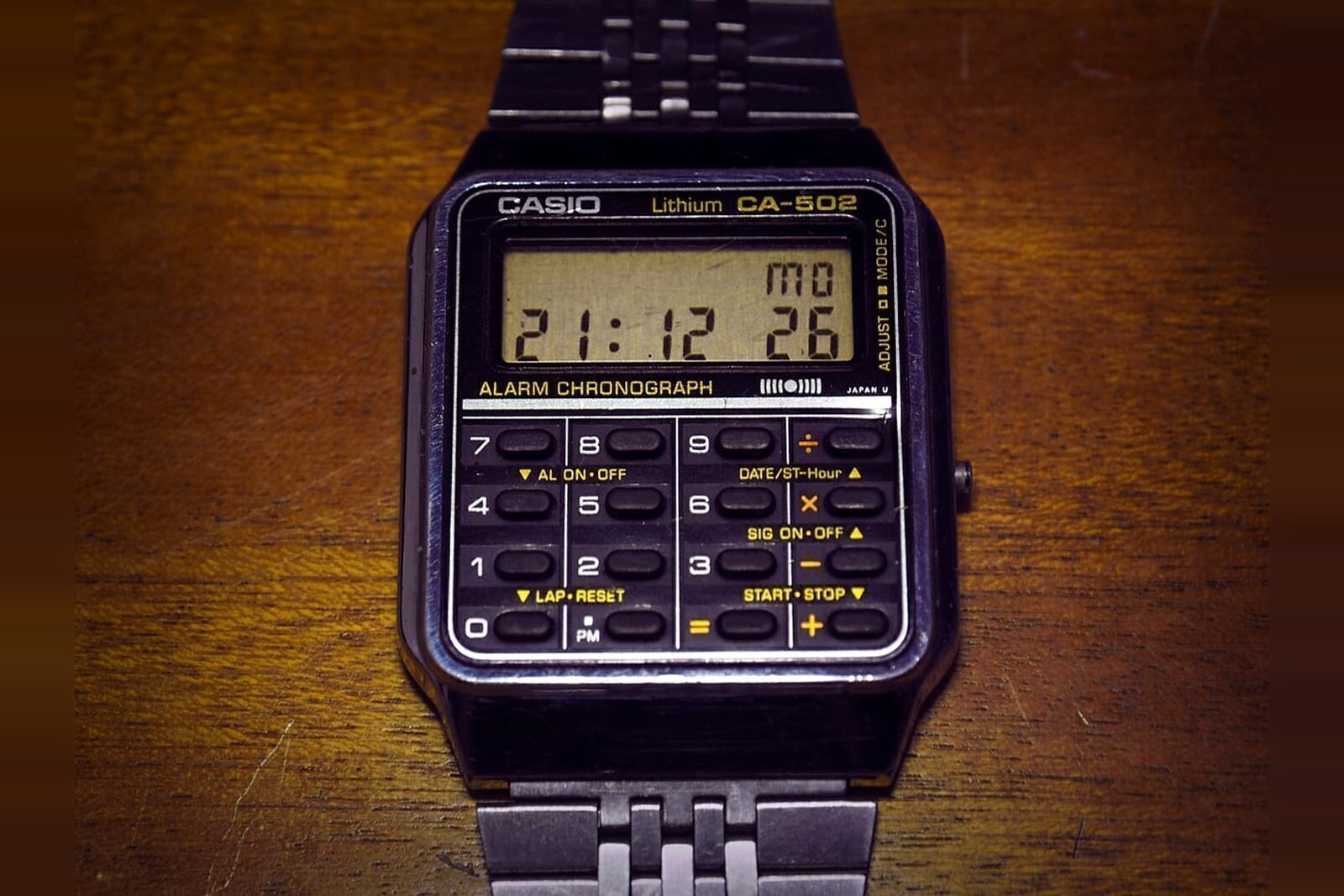
A mechanical watch is a machine for turning a slow, strong, decaying force into a fast, weak, constant one. Everything inside the case exists to serve that conversion, and the gears are where it happens. Understanding the train takes about five minutes, and it makes every specification you will ever read about a movement — beat rate, jewels, power reserve, hacking — mean something specific instead of sounding like a score.
Two ways to keep time
Before the parts, the fork in the road. Almost every watch is one of two things:
- Mechanical. A coiled spring releases energy through a gear train, and an oscillating balance regulates how fast it escapes. The timekeeping reference is physical, and it depends on a spring, a wheel and gravity.
- Quartz. A battery drives a circuit, a quartz crystal oscillates at a fixed frequency, and a motor moves the hands. The timekeeping reference is electronic, and it does not care about the gears at all.
Almost everything below describes the mechanical side, because that is where the gears do the interesting work. The quartz section at the end explains what replaces all of it.
The mainspring is the power station
A ribbon of hardened steel is coiled inside a drum called the barrel. Winding — by hand or by the oscillating weight of an automatic — tightens the ribbon and stores energy in it. Unwinding, it releases that energy as torque through the barrel's toothed rim.
Two consequences follow from that design, and they explain a lot of watch behaviour:
- The torque is not constant. It is strongest fully wound and weakest at the end of the reserve. This is one reason a watch's rate varies slightly depending on how wound it is, and why "isochronism" — constant rate regardless of amplitude — is a difficult engineering goal.
- The barrel turns very slowly. In a typical movement it completes roughly one revolution in about eight hours. From there, every subsequent stage in the train has to speed things up.
The going train: gears that multiply speed
The barrel drives a pinion on the centre wheel. The centre wheel drives the third wheel, the third the fourth, the fourth the escape wheel. Each stage is a large toothed wheel meshing with a small pinion, and the ratio between them steps the speed up.
Ratios of roughly seven to ten to one per stage, across about four stages, take the barrel's one turn per eight hours up to the escape wheel's rate. It is a reduction gearbox run in reverse — the torque falls as the speed rises, which is exactly the trade you want, because the escapement needs speed and only a whisper of force.
The train also carries the hands, through a separate set of wheels called the motion works, which is what gives you a minute hand at one revolution per hour and an hour hand at one per twelve. The seconds hand usually comes off the fourth wheel, which turns once a minute by design rather than by coincidence.
The escapement: where the machine is actually regulated
The escape wheel is the last wheel in the train, and it is not allowed to spin freely. A pallet fork locks and unlocks it, releasing the train one tooth at a time. Each release gives the balance wheel a small push — an impulse — to replace the energy it loses to friction on every swing.
This is the heart of a mechanical watch: the balance wheel swings back and forth at a fixed period, the escapement lets the train advance once per swing, and the hands therefore move at a rate set by the balance rather than by the spring's strength. The escapement is also where most of the mechanical wear lives, and where the difference between an ordinary movement and a very good one is most visible.
Beat rate is measured in vibrations per hour, counting both directions of each swing. Common rates are 21,600, 28,800 and 36,000. A higher rate means the balance is disturbed less by a knock and the seconds hand sweeps more smoothly; it also means more impulses per hour, more wear and a shorter interval between services. None of those is free, which is why high rates are a choice rather than universally better.
Jewels, honestly
Jewels are bearings made of synthetic ruby, and they exist because steel running directly in a brass plate wears. A ruby bearing holds a polished steel pivot with very low friction and, practically, no wear at all.
They are placed where load is carried: the pivots of the going train, the balance staff and the pallet fork. A normal modern movement has somewhere in the region of seventeen to twenty-five of them.
The reason to be sceptical of the jewel count as a specification is that a jewel in a position that carries no load does nothing. Historically, jewelling everything was a way to advertise a higher number, and the practice is remembered well enough that a high count should prompt a question rather than admiration. Twenty-one well-placed jewels beat thirty-one badly placed ones.
Power reserve and winding
Power reserve is how long a fully wound movement runs before it stops — commonly around 38 to 48 hours on a modest automatic, and considerably more on movements designed for it. It is not the same as accuracy, and a long reserve is not automatically better: getting there can involve lower amplitude and a different set of compromises.
A hand-wound movement is wound by the crown. An automatic adds a weighted rotor that swings as the wearer moves and winds the mainspring through a reduction of its own, which is a second gear train sitting on top of the first. An automatic kept in a drawer will stop, which is normal and not a fault; the fix is to wear it or wind it.
What a quartz movement replaces
Quartz movements keep gears — they have to, because something must turn the hands — but the gears no longer regulate anything. The chain is:
- A quartz crystal cut to oscillate at 32,768 times per second. That number is not arbitrary: it is a power of two, which makes it easy to divide by digital circuits.
- A divider circuit halves that frequency fifteen times, producing exactly one pulse per second.
- A stepper motor converts each pulse into a discrete rotation, driving a small reduction gear train that turns the hands.
The consequence is that accuracy comes from the crystal, not the mechanics, which is why an inexpensive quartz watch can be far more accurate than an expensive mechanical one. The gears in a quartz movement only have to transmit motion, so they face none of the loads a mechanical train does and last much longer.
Because the pulse is one per second, the seconds hand ticks once per second. The "sweep" you see on a mechanical watch is not smoothness for its own sake: it is the escapement releasing many times per second. Some quartz movements use a higher-frequency drive to imitate it, and a few do the reverse — the four-second jump that signals a low battery, described in our battery life guide.
Where a calculator watch sits in all this
A calculator watch is not a hybrid in the sense an automatic-quartz watch is. It is an ordinary quartz movement with a second, largely independent electronic system bolted alongside it: a keypad, a calculator chip and a shared display.
The calculator does not participate in timekeeping at all. It draws on the same cell, which is why heavy calculator use affects battery life rather than accuracy, and it changes nothing about the gear train turning the hands. The engineering achievement in a calculator watch was miniaturisation — fitting a working keypad, a chip and a display into a case a few millimetres thick — rather than a new way of measuring time. Our guide to what the keypads actually do sets out the function sets model by model, and the history of the format explains why that miniaturisation was the hard part.
Reading a movement specification without being sold to
Five figures are worth looking for, and each one means something concrete:
| Specification | What it actually tells you |
|---|---|
| Movement type and calibre | Which engine it is, so you can look up independent information rather than trusting the brand's summary |
| Beat rate | Smoothness and disturbance resistance versus wear; a design choice, not a grade |
| Power reserve | How long it runs off the wrist, and roughly how the rate may drift as it winds down |
| Jewels | Bearing count. Useful as context, misleading as a score |
| Hacking and hand-winding | Whether the seconds hand stops when the crown is pulled, and whether it can be wound by hand. Practical, often omitted |
What is not on that list is any claim about finishing, decoration or "in-house" status. Those matter to collectors and to price, and none of them makes a watch keep better time. A Côtes de Genève finish on a bridge you cannot see through a solid case back is a cost, not a benefit, unless you value the object rather than its function.
Frequently asked questions
What do the gears in a watch do?
Two jobs at once. They carry power from the mainspring to the escapement, and they divide the rotational speed of the barrel down to the speeds the hands need — one revolution per hour for the minute hand, one per twelve hours for the hour hand, one per minute for the seconds hand. The gear train is a transmission and a reduction gearbox in a space a few millimetres across.
How many gears are in a watch movement?
A conventional hand-wound or automatic movement has a going train of roughly four stages — barrel, centre wheel, third wheel, fourth wheel and escape wheel — plus the motion works that drive the hands and, often, a separate winding train. Counting them as "gears" is misleading, because each stage is a wheel meshing with a much smaller pinion, and one wheel is two parts. A typical movement has somewhere over a hundred components, of which a dozen or so are wheels.
Why do watch movements have jewels?
Jewels are bearings. Synthetic ruby is extremely hard and holds a polished pivot with very low friction and effectively no wear, which is why they are used at the points that carry load — principally the pivots of the going train and the escapement. They are not a decoration count. A movement with jewels at every pivot including the ones that carry no load is being marketed, not engineered, and more jewels does not mean a better movement.
What is a beat rate, and does a higher one mean a better watch?
The beat rate is how many times the balance wheel swings through its centre per hour. Higher rates resist disturbance better and can give a smoother seconds hand, at the cost of more wear and shorter service intervals. Common figures are 21,600, 28,800 and 36,000 vibrations per hour. A higher figure is a design choice with trade-offs, not a quality ranking.
How does a quartz watch work without a gear train?
It still has gears, just far fewer and with nothing to power them but a motor. A quartz crystal oscillates at 32,768 Hz, a circuit divides that down to one pulse per second, and a stepper motor turns the hands through a small reduction. The timekeeping reference is electronic and the gearing only moves the hands, so the accuracy no longer depends on the mechanics.
What does "movement" mean when I am buying a watch?
The engine: everything inside the case that makes it run, separately from the case, dial, hands and strap. Movements are described as in-house when the brand designs and builds them, and as supplied or ébauche-based when they come from a movement maker. Neither label tells you the movement is good, and the same supplied movement appears in watches at very different positions in the market.
This article is editorial. Where a figure is given, it comes from the manufacturer’s published documentation and is dated on the page; where we are expressing a judgement, we say so. Something wrong? Tell us.