
Guide · 13 min read
Vintage Calculator Watches
Vintage calculator watches are the most romantic and the most frustrating corner of this hobby. A 1980s Casio with a working calculator is a genuine piece of computing…
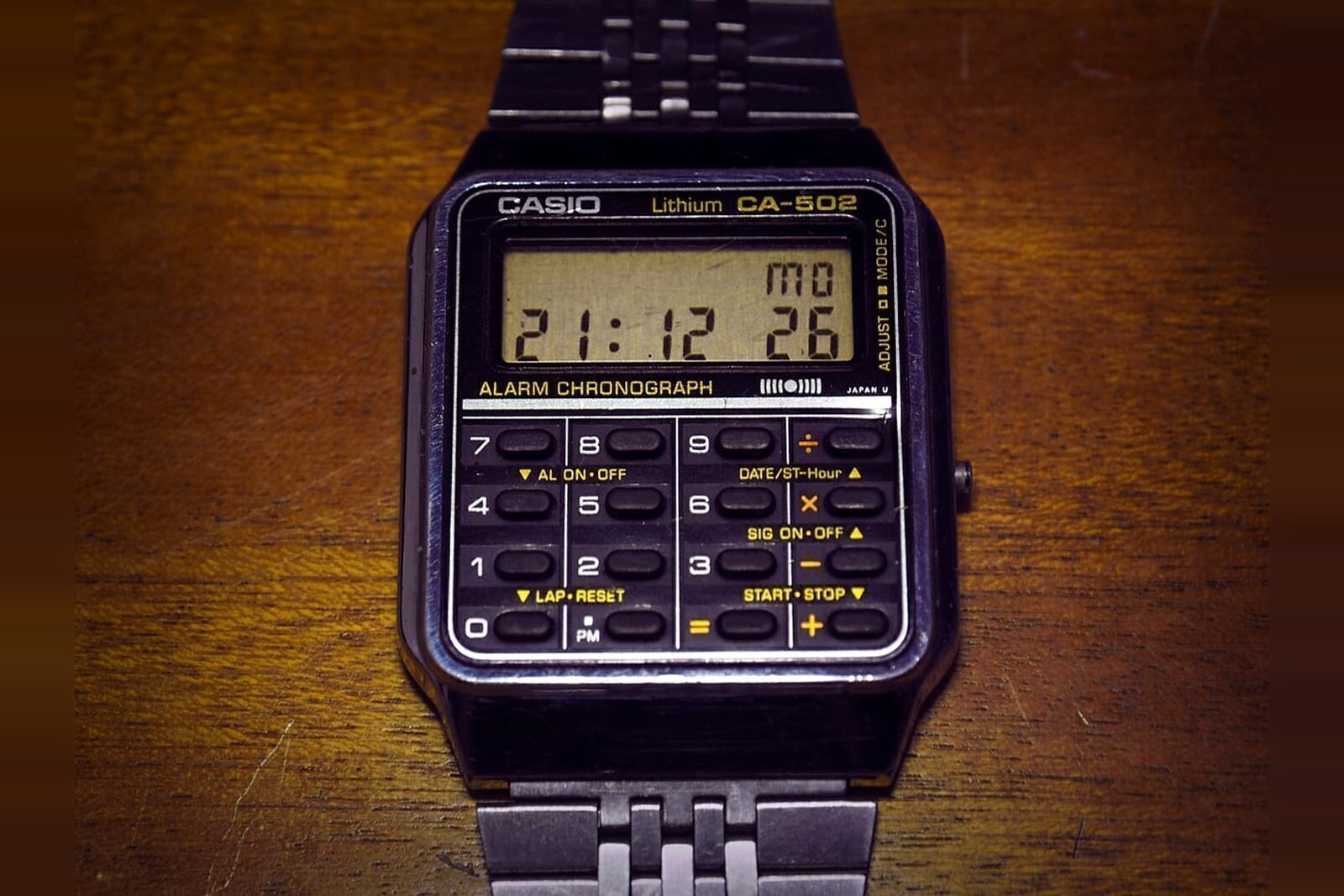
Vintage calculator watches are the most romantic and the most frustrating corner of this hobby. A 1980s Casio with a working calculator is a genuine piece of computing history you can wear; the same watch with a failed LCD is a paperweight that cannot be repaired at any sensible cost. The difference between the two is often invisible in an online listing.
This guide covers the models worth knowing, how the technology developed, and the specific checks to run before you pay for one.
Where the category began
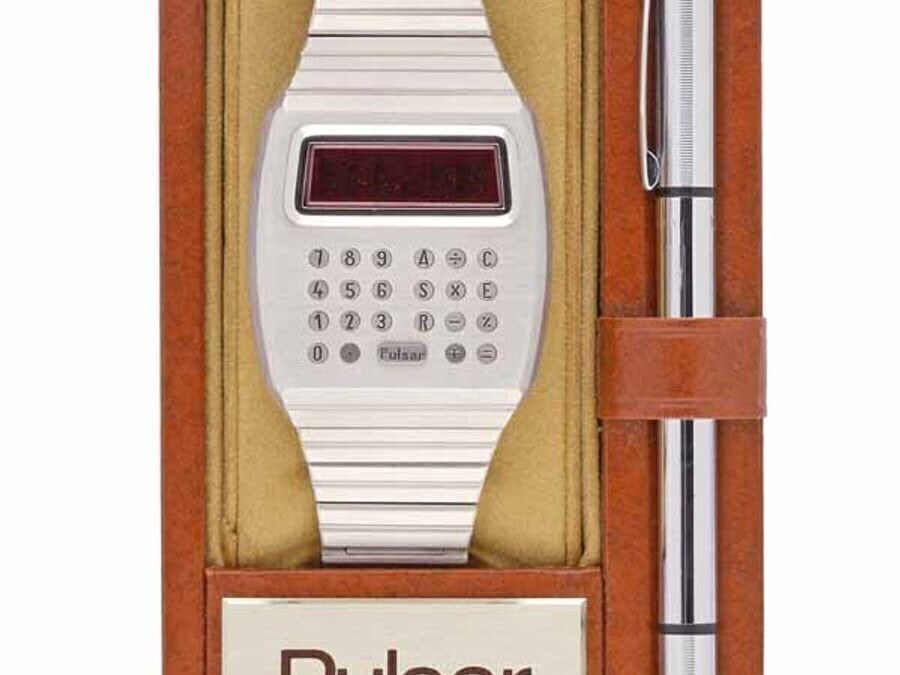
The first commercially sold calculator wristwatch was the Pulsar Time Computer Calculator, introduced in 1975 by Pulsar, then a division of the Hamilton Watch Company. It used a red LED display and a recessed keypad so small that it shipped with a stylus. It was a luxury object rather than a consumer one, and it established the idea that computation belonged on the wrist.
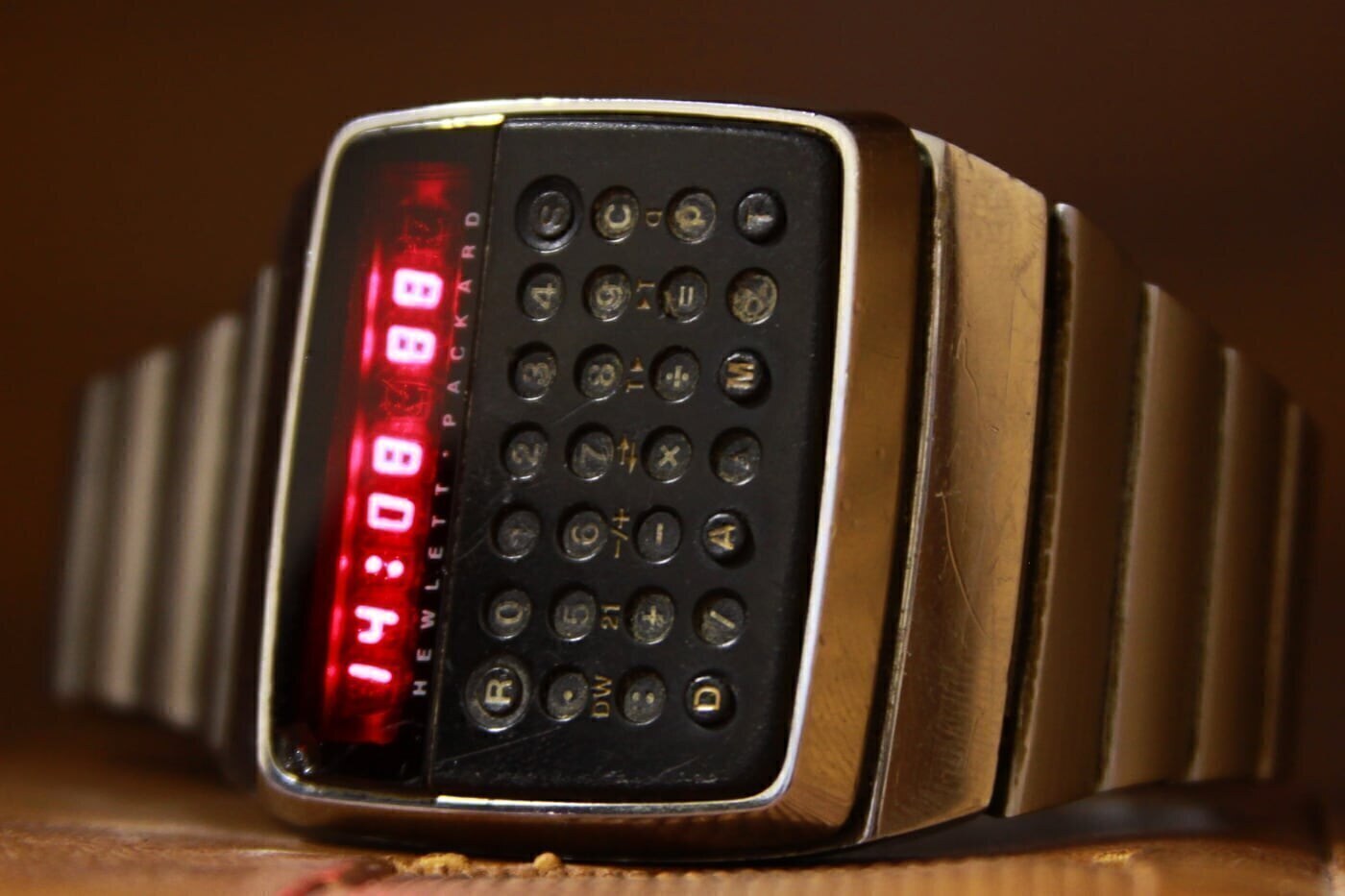
The Hewlett-Packard HP-01 followed in 1977 — a calculator built by a calculator company, with a considerably more serious specification and a price to match. Both are now museum pieces: the Deutsches Uhrenmuseum in Germany holds a Pulsar example, and surviving HP-01s trade as collector items.
The format only became a mass-market product when LCD technology replaced LED and Japanese manufacturers began building calculator watches in plastic at consumer prices. That is the era most vintage calculator watches come from, and it is where Casio's line begins.
The models worth knowing, in pictures
Photographs below are licensed from Wikimedia Commons or in the public domain, with the photographer credited. We do not use manufacturer press images, and where no freely licensed photograph exists we publish nothing rather than a substitute.
The models worth knowing
Pulsar Time Computer Calculator (1975)
The origin point. LED display, stylus-operated keypad, and a construction that prioritised being remarkable over being usable. Its significance is historical rather than practical: this is the watch that made the category.
Hewlett-Packard HP-01 (1977)
An engineer's calculator on a bracelet. The HP-01 is the clearest example of the calculator watch as professional instrument rather than novelty, and it remains the reference point for anyone arguing that these watches were once serious tools.
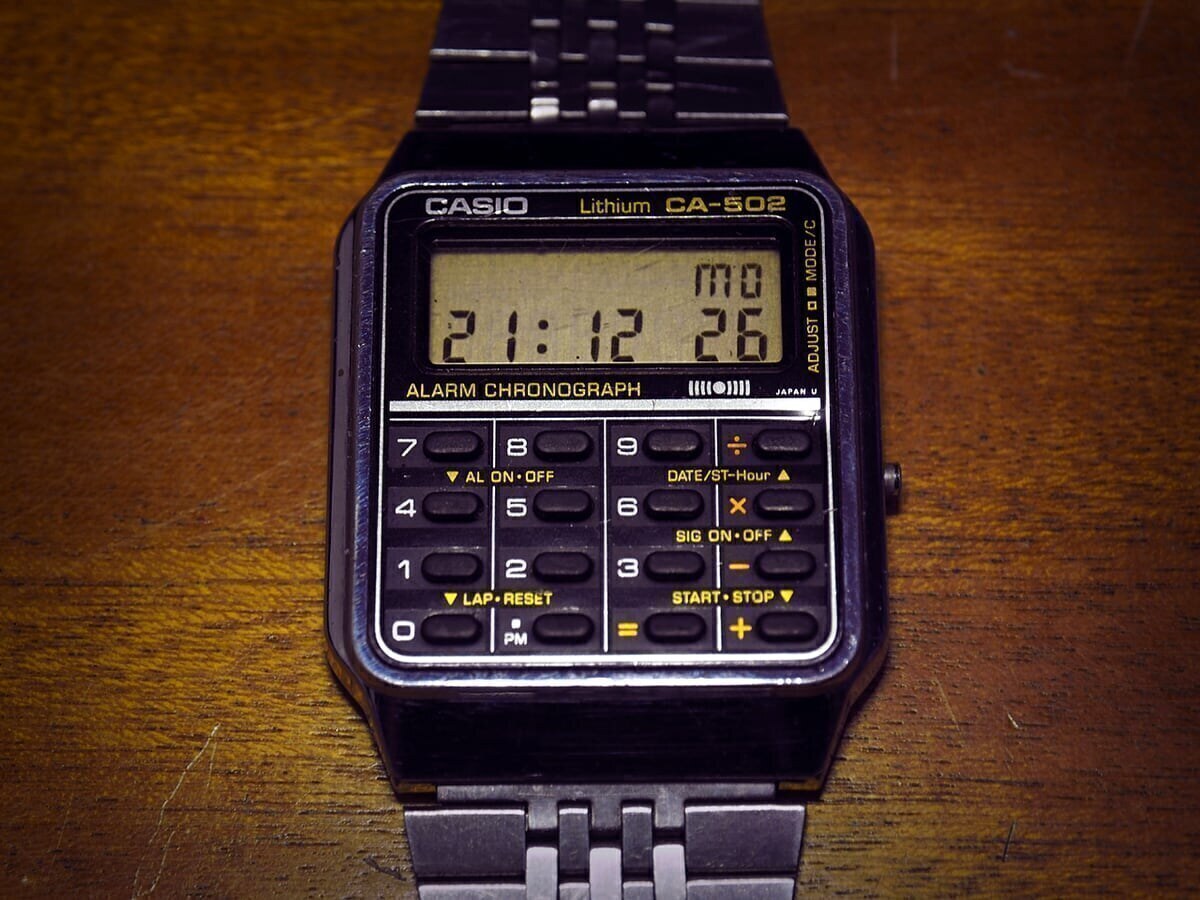
Casio CA-502 (1984)
A period Casio calculator watch from the middle of the boom, and a good illustration of how consistent Casio's design language has been: the case proportions, keypad layout and display position are recognisably the ancestors of the current CA-53W.
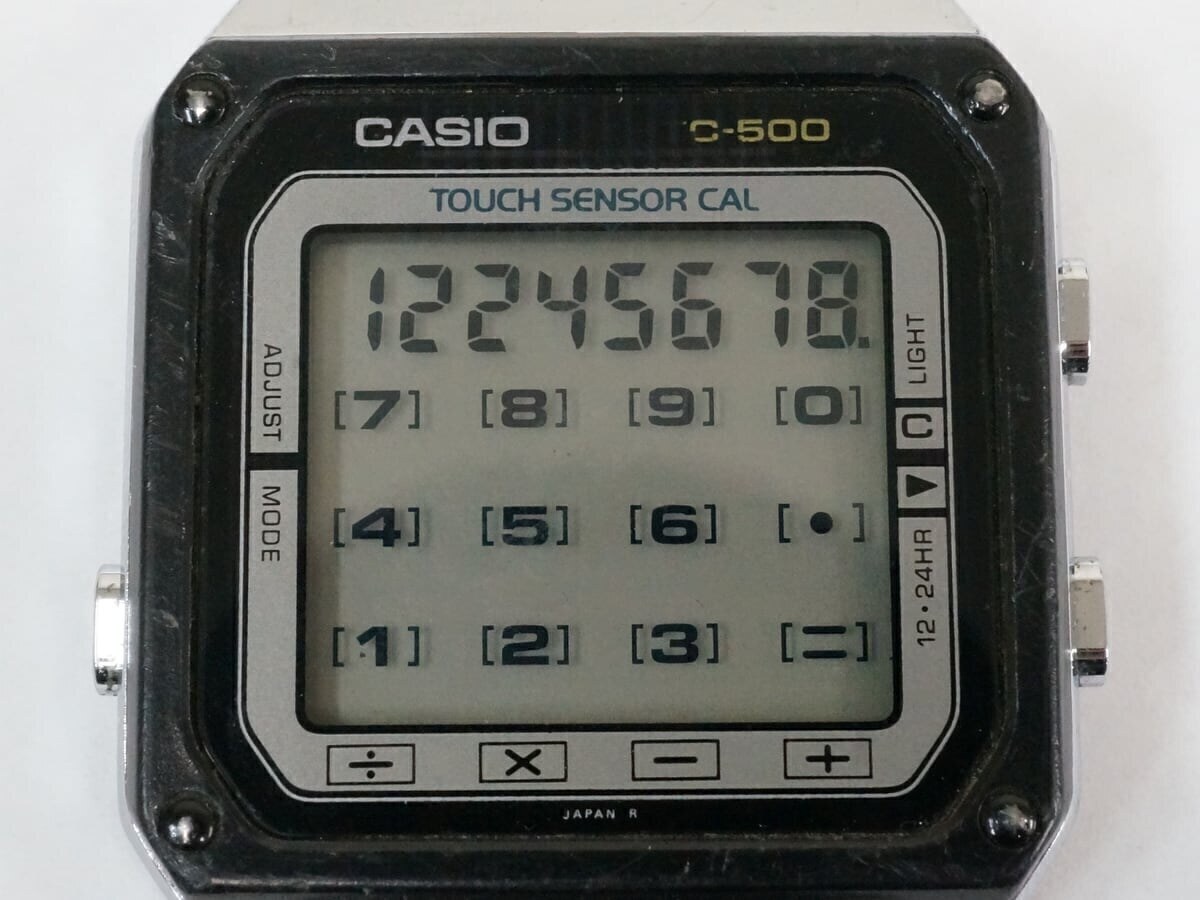
Casio TC-500 (1983)
The touch-sensor calculator watch. Instead of physical keys, the TC-500 used a capacitive touch surface for the calculator and function controls. It is the most interesting dead end in the category — a design direction that was abandoned, and therefore the most collectible Casio of the period for people who care about engineering rather than nostalgia.
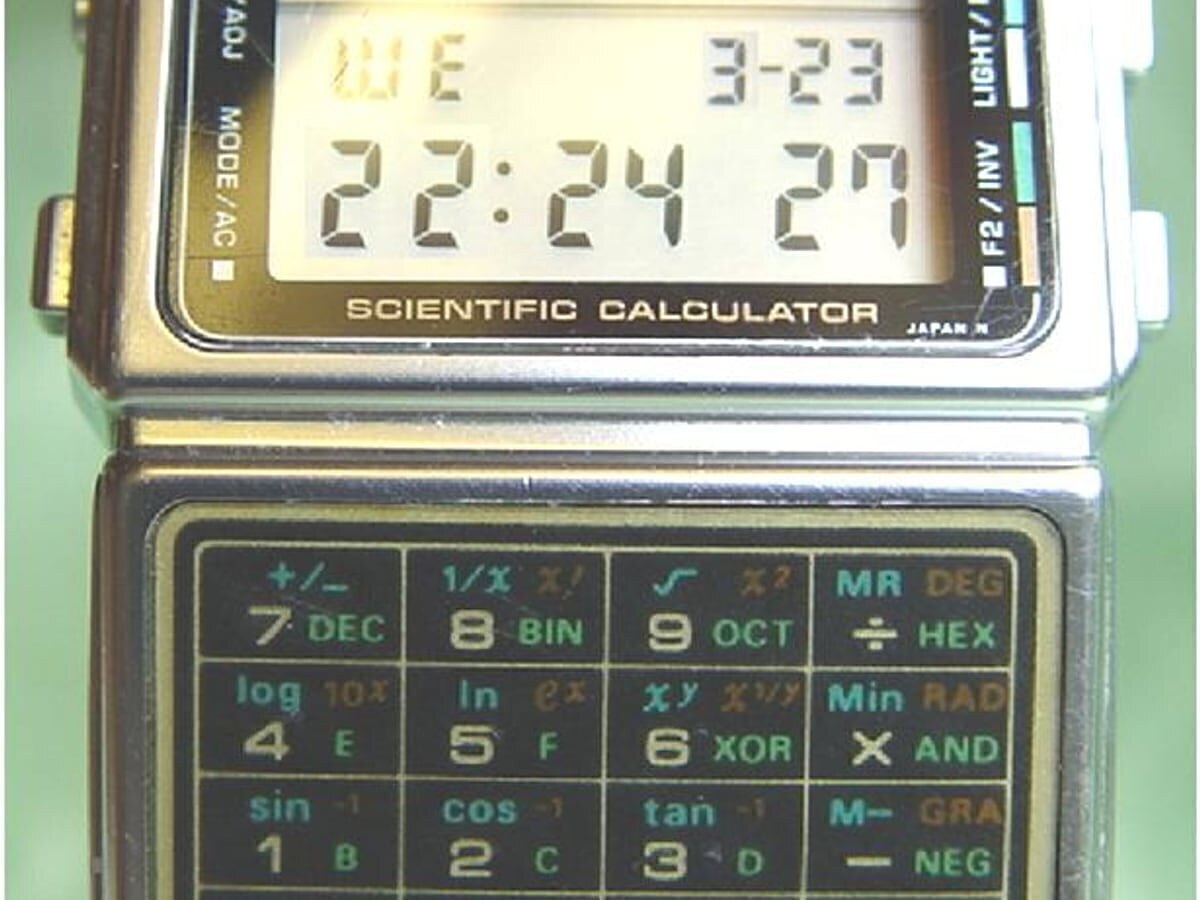
Casio CFX-400 (mid 1980s)
A scientific calculator watch: trigonometry, logarithms, exponentials and hexadecimal arithmetic, with sixteen keys carrying three functions each. The CFX-400 is the high-water mark of the idea that a wristwatch could be a real calculating instrument, and it is also a demonstration of why the format stopped developing — the keypad became unusable.
What to check before you buy vintage
Because the electronics are the failure point, a vintage calculator watch should be assessed as an electronic device first and a watch second.
- Test every segment of the LCD. Ask for a photograph with all segments lit — most modules have a test mode, or you can view a full-8s display by entering 88888888 in calculator mode. Dead segments, dark patches and bleeding are usually terminal.
- Confirm the calculator actually computes. A working display with a dead keypad is common. Ask for a photograph of a completed calculation.
- Check the keypad legends. Printed legends wear off before the keys fail. Heavy wear signals heavy use.
- Look at the case edges. Polishing removes the original brushed finish and is effectively irreversible. A polished case is worth less than a worn one with original finish.
- Ask about the battery compartment. Leaked cells corrode the module's contacts, and that damage is frequently fatal.
- Establish what is original. Bands, clasps and case backs are frequently swapped between donor watches.
What vintage watches are worth
We do not publish valuations. The market for vintage calculator watches is thin, illiquid and driven by a small number of buyers, and any figure we quoted would be a guess presented as a fact. What we can say is that rarity and condition do not correlate the way sellers often imply: a common Casio in excellent working order is a better purchase than a scarce one with a failing module.
Should you buy vintage or new?
Buy new if you want a calculator watch to wear. The current Casio models are inexpensive, verified, replaceable and — crucially — serviceable. Our calculator watch guide sets out the current options.
Buy vintage if you are interested in the objects themselves, you are comfortable with the possibility of a non-working purchase, and you would enjoy the research. Start with the history of the calculator watch so you know what you are looking at.
Frequently asked questions
When was the first calculator watch made?
The first commercially sold calculator wristwatch was the Pulsar Time Computer Calculator, launched in 1975 by Pulsar, then a division of the Hamilton Watch Company. It used an LED display and a stylus-operated keypad.
Are vintage calculator watches repairable?
Usually not economically. The LCD is bonded to the module and the module is not generally available as a new part, so repair normally means transplanting a module from a donor watch of the same model. Cosmetic restoration — a new band, a new battery, a clean — is straightforward; electronic repair is not.
What is the Casio TC-500?
The TC-500 is a 1983 Casio calculator watch that replaced physical keys with a capacitive touch surface for the calculator and function controls. It is one of the more collectible Casios of the period because the design direction was abandoned.
Which vintage calculator watch should a beginner buy?
We would suggest not buying vintage first. If you do, choose a common Casio reference in visibly working condition with a clear photograph of a completed calculation, and accept that you are buying an object rather than a reliable timekeeper.
This article is editorial. Where a figure is given, it comes from the manufacturer’s published documentation and is dated on the page; where we are expressing a judgement, we say so. Something wrong? Tell us.