
Collection · 0 models
Vintage Calculator Watches
The 1975 Pulsar, the HP-01, Casio’s C-series and the touch-sensor TC-500: the machines that made a calculator wearable, and what collectors look for now.
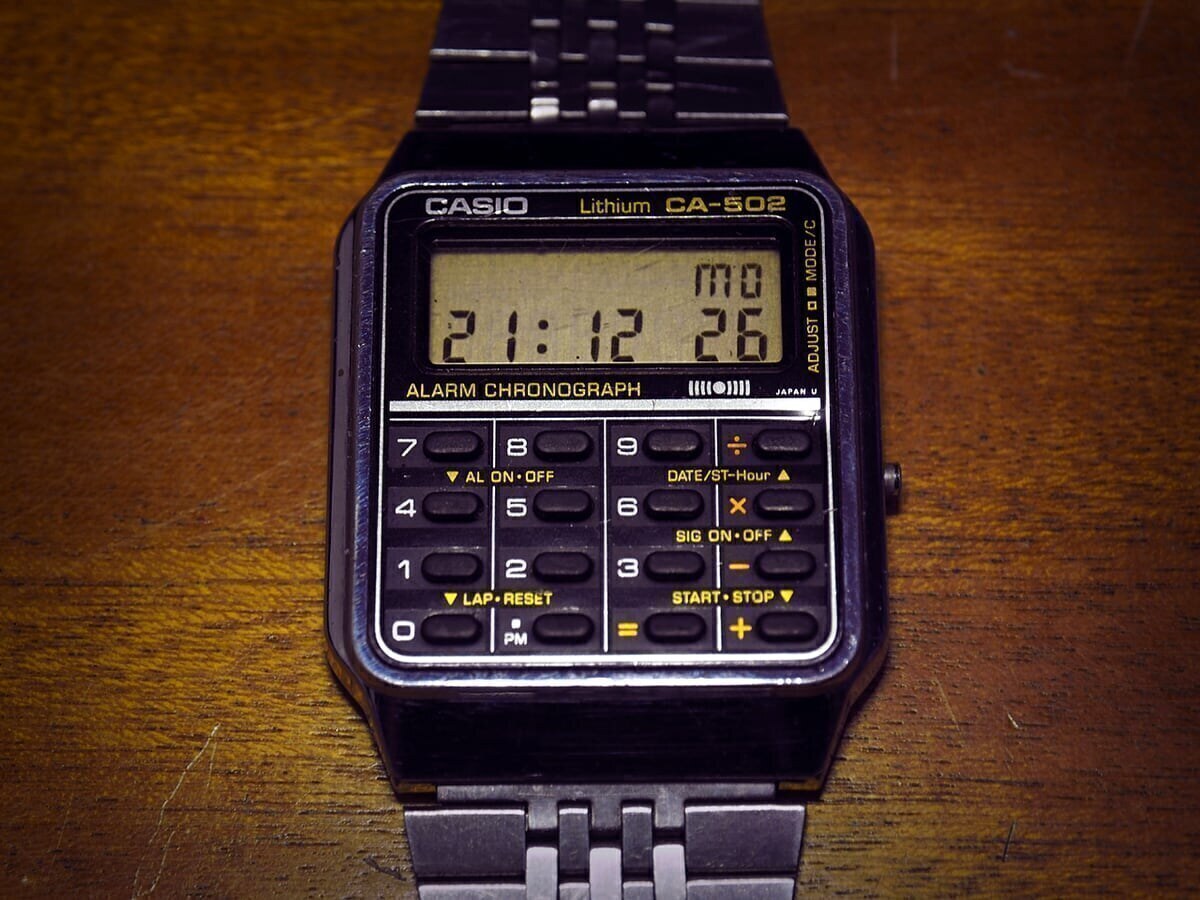
No models listed here yet — deliberately
We only add a model to a collection once its specifications have been verified against the manufacturer’s own documentation and we have a photograph we are licensed to use. We would rather publish nothing than a thin page built around an unverified product. This page explains the category and what we are still checking.
Vintage calculator watches sit at an awkward intersection: they are electronics, and electronics age badly. A 1984 Casio CA-502 that has been in a drawer for thirty years is more likely to need a module replacement than a service, and replacement modules come from donor watches. That is the single most important thing to understand before collecting them.
Where the category started
The first commercially sold calculator wristwatch was the Pulsar Time Computer Calculator, launched in 1975 by Pulsar, then a division of the Hamilton Watch Company. It used an LED display and a touch-sensitive keypad that needed a stylus. It was followed in 1977 by the Hewlett-Packard HP-01, a serious calculator with a price to match. Mass adoption came later, with Japanese manufacturers building LCD-based models at consumer prices.
What collectors actually look for
Condition of the LCD is the first thing to check: segment bleed, missing digits and dark patches are usually terminal, because the display is bonded to the module. After that, completeness — original band, box, manual — and whether the case has been polished. A polished case loses its original brushed finish and is very hard to reverse.
Our vintage guide goes through the models worth knowing and the checks to run before you buy.